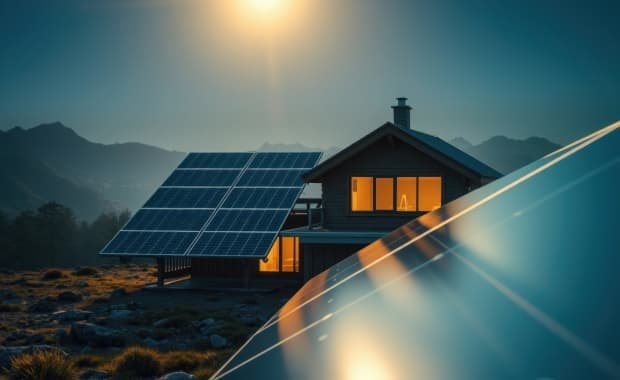
There is a useful lesson in places where sunshine is abundant but coal generation still dominates. The constraint is not sunlight. It is storage and reliability. Solar produces when the sun shines; a coal plant produces whenever it is asked. Until solar can be stored cheaply and dispatched on demand, fossil generation keeps a structural advantage, even in the sunniest places on Earth.
That same logic decides whether a home should add a battery, and what going off-grid really costs. For our off-grid work, see our off-grid solar systems.
Why sunlight alone does not win
A grid needs power every second of the day, not just the sunny hours. Coal and gas provide two things solar on its own cannot:
- Dispatchable power, generated on demand at any hour.
- Grid inertia, the physical stability that keeps frequency steady.
Solar panels provide neither. They generate intermittently and they do not stabilise the grid the way spinning turbines do. That is why a sunny island, or a sunny state, can still lean on coal: the sun is abundant, but the storage and stability that would let solar replace coal were not.
Batteries are the missing piece
Cheap, long-lasting storage changes the equation. When excess daytime solar can be stored and discharged after dark, solar becomes dispatchable. It can cover the evening peak that coal once owned. This is exactly why battery prices and programs such as the Cheaper Home Batteries Program matter so much: they attack the real constraint, not the supply of sunlight.
What this teaches a homeowner
The same principle applies at the scale of one roof. Without a battery, a home still buys power at night. With a battery, the home's own generation covers the evening, which is where most of the bill lives. The decision is not "solar or not"; it is "how much storage makes the solar worthwhile."
The reality of going off-grid
Going fully off-grid is the extreme case of the same lesson. An off-grid home must be sized for the worst week of the year, not the average day. That means:
- More panels to cover winter and cloudy stretches.
- Enough battery to carry multiple days of low generation.
- A backup generator for the deepest winter trough.
It is completely doable and is the right call for remote homes, farms and sites where connecting to the grid is impractical. It is simply a bigger, more carefully designed system than a grid-connected one.
Frequently asked questions
Why does coal still win in some sunny places?
Because coal provides continuous, dispatchable power and grid inertia, while solar produces only when the sun shines. Without cheap storage, a grid still needs reliable base load.
What changes that?
Batteries. Storage lets solar generation shift to when it is needed, removing coal's main advantage.
Can a home go fully off-grid?
Yes, with a correctly sized array, enough battery and a backup generator where needed. It requires careful design.
Get the storage design right
Solar Chief designs systems around how you actually use power, so storage is sized to the real need rather than added as an afterthought. Whether you want to cut your evening bill or go fully off-grid, tell us about your property.
More from the blog
Let's Talk
Ready For A Free Quote?
Tell us about your property and we'll come back with a tailored solar + battery recommendation within 1 business day.